A new film from Emmy Award–winning director Viviane Silvera
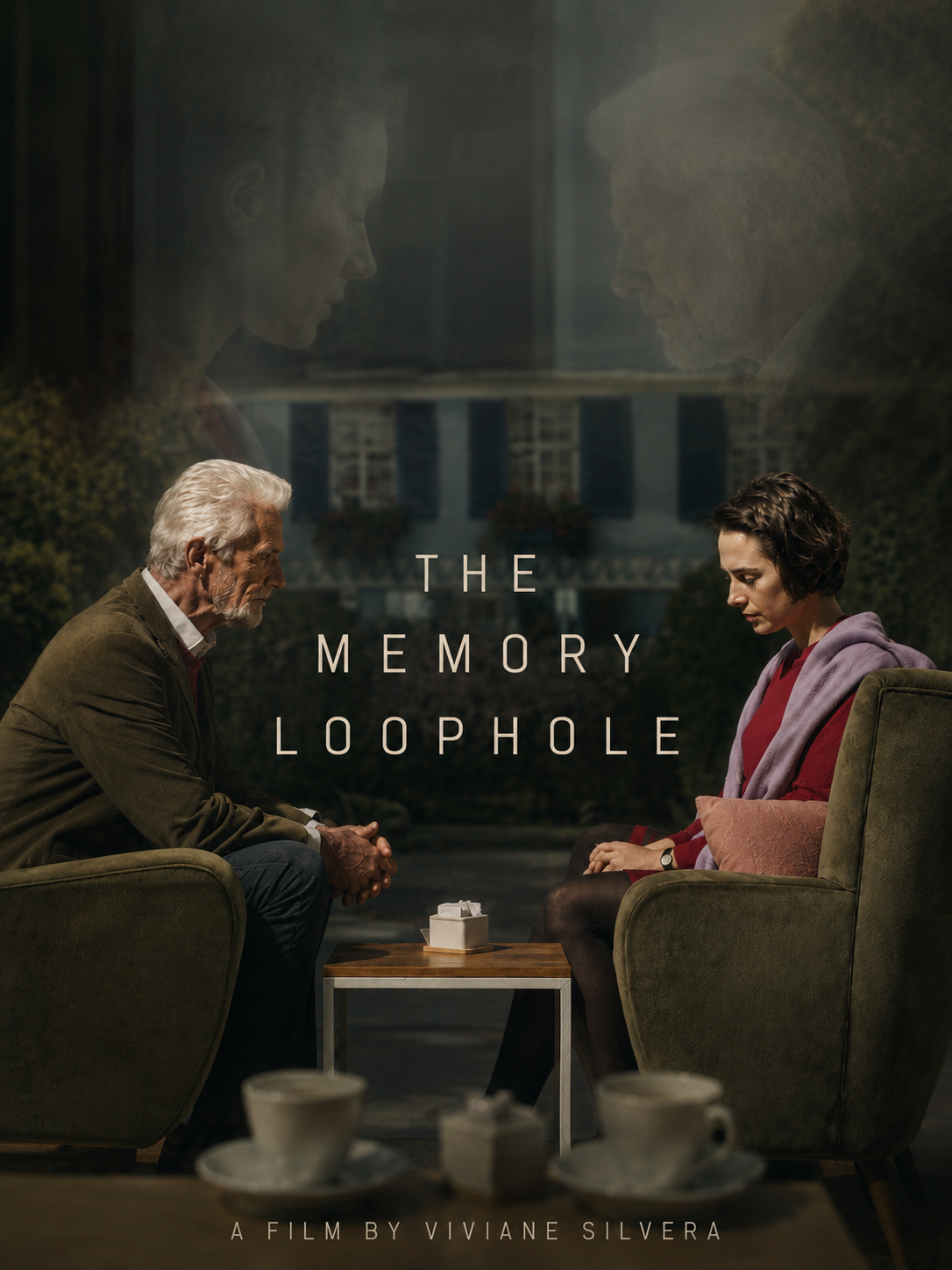
About the Film
When Victoria was eleven, her father died of AIDS-related suicide. What remained were fragments: a handful of photographs, unfinished stories, and a few places he had always dreamed they would visit together.
Years later, an unexpected cassette recording arrives. On it, her father is twenty-one years old, narrating slides from a year he spent in Sweden. His voice is funny, hopeful, and startlingly alive. Listening to it, Victoria realizes she is meeting a version of her father she never knew existed.
The tape becomes a doorway into memory.
What begins as a search for one man gradually becomes an exploration of how we reconstruct the people we love—and ourselves—from the fragments they leave behind.
A Journey Through Memory
Rather than following a conventional investigative documentary, The Memory Loophole unfolds as an act of reconstruction.
Victoria retraces the places her father once imagined sharing with her: Stockholm, Angkor Wat, Paris, and ultimately Sacramento, where his life ended before hers had fully begun.
Each place reveals another piece of the puzzle: his ambitions, his fears, the life he concealed, and the inheritance she never knew she carried.
The journey asks a larger question:
If memory is built from fragments, how do we decide which ones become part of us?
Visual Language
The Memory Loophole does not recreate the past through dramatic reenactments.
Instead, the film reconstructs memory inside the artist's studio.
Thousands of hand-painted animation frames merge with projected archival photographs, home movies, maps, letters, recorded voices, and landscapes. The studio itself becomes a living memory space.
As Victoria moves through projected streets of Stockholm, the architecture of Angkor Wat, Paris cafés, Sacramento neighborhoods, and fragments of family photographs, the audience experiences memory not as something observed—but as something actively rebuilt.
The projections are not simply a visual device.
They are the film's central storytelling language.
They allow past and present to exist simultaneously, transforming physical space into emotional space and revealing memory as something fluid, layered, and continually reconstructed.
Why This Form
Modern neuroscience tells us that memory is not a recording.
Each act of remembering rebuilds the past from scattered sensory impressions, emotional traces, and incomplete information.
The film mirrors that process.
Its structure moves associatively rather than chronologically.
Paintings dissolve into archival material.
Fragments echo across decades.
Places become emotional landscapes rather than geographic locations.
The audience experiences memory the way the brain reconstructs it.
Form and subject become inseparable.
Director's Note
For years, I have been exploring memory through painting.
Each painting begins with fragments: a photograph, a feeling, a color, a gesture. The finished image isn't recovered from the past. It's reconstructed. That realization eventually led me to make See Memory, a film that explored the neuroscience of remembering and revealed that memory is not a fixed recording but a living, reconstructive process.
When I met Victoria, I realized I wanted to ask a different question.
If memory is always being rebuilt, what do we do with that knowledge?
Victoria inherited fragments of her father: photographs, family stories, places he once dreamed of visiting with her, and decades of silence. She cannot recover what was lost. But she can begin to understand what remains. As she pieces together those fragments, she begins to discover that memory is not only about preserving the past. It is also about deciding what we carry forward.
As both filmmaker and painter, I don't simply observe that process. I participate in it.
The studio becomes the film's landscape. Paintings, projected archival photographs, home movies, recorded voices, maps, and landscapes gradually surround Victoria as she walks through memories that no longer exist in physical form. Rather than recreating the past through reenactments, we reconstruct it through the same materials the brain itself uses: fragments, images, sensations, and imagination.
What interests me most is not whether memory is perfectly accurate. It is how memory shapes identity, and how understanding its reconstructive nature may change our relationship to the stories we inherit.
The Memory Loophole grows directly out of the questions raised by See Memory. If that film explored how memory works, this one explores what becomes possible once we understand that it is always being remade.
My hope is that audiences leave not with the feeling that the past has changed, but with the possibility that our relationship to it can.
— Viviane Silvera
Themes
The Memory Loophole explores:
memory and identity
grief and emotional inheritance
AIDS history and family silence
LGBTQ+ history
reconstructive memory
neuroscience and imagination
art as a way of knowing
how children make meaning from incomplete stories
Building on See Memory
Following the PBS broadcast of See Memory, this film continues Viviane Silvera's exploration of memory through painting, documentary filmmaking, and neuroscience.
Where See Memory examined how memory works, The Memory Loophole asks what happens when memory itself becomes the only way to recover a life.
Current Opportunities
The film is currently in production.
We are seeking:
finishing funders
producing partners
archival partners
work-in-progress screening hosts
university collaborators
museum and arts partners
impact and community engagement partners
Designed for Conversation
The film is being developed alongside educational and public engagement programming for:
universities
museums
neuroscience and psychology programs
HIV/AIDS organizations
LGBTQ+ organizations
grief and bereavement communities
arts and humanities forums
For producing partnerships, work-in-progress screenings, collaborations, or philanthropic support: